Why is my boiler losing pressure?
A boiler loses pressure because water is escaping from the sealed heating system, usually through a small leak, a worn pressure relief valve or a faulty expansion vessel. Bleeding radiators also lowers the pressure, which is normal. You can safely check the gauge, top up through the filling loop and look for drips, but anything inside the boiler needs a Gas Safe registered engineer.
Most homes in Swindon with a combi or system boiler have a sealed system, kept under a little pressure so the boiler can pump water round. If that pressure falls too low, the boiler stops firing to protect itself. So a pressure problem often shows up as no heating and no hot water on a cold morning.
What pressure should my boiler be at?
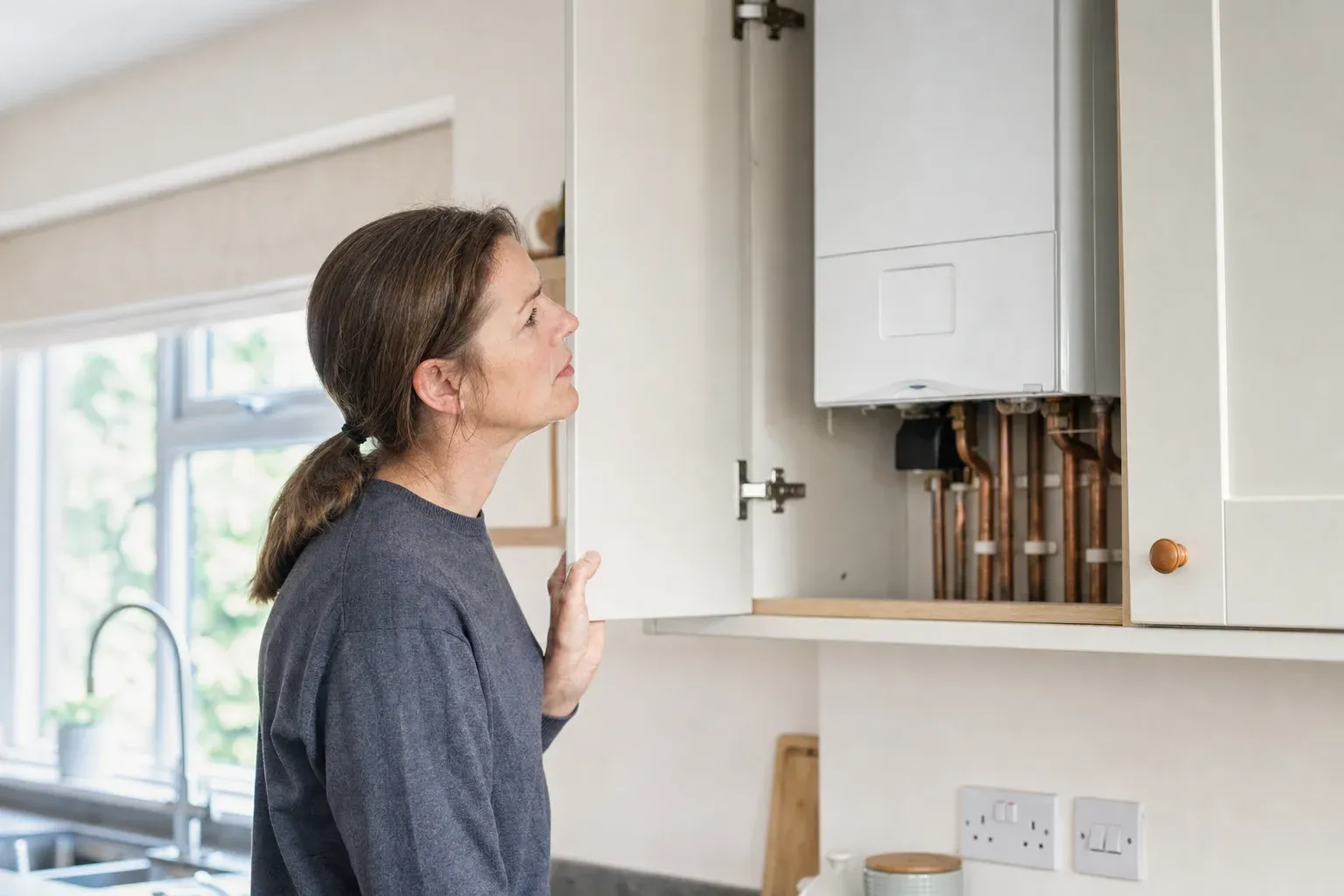
Find the pressure gauge on the front or underneath your boiler. It’s either a dial or a digital readout. On most systems it should read around 1 to 1.5 bar when the heating is off and cold. Your boiler’s manual will give the exact range for your model, so check it.
When the heating is on, the reading will rise a bit because hot water expands. That’s fine. If it climbs close to 3 bar when hot and then drops right down when cold, that points to a problem with the expansion vessel, which we’ll come to below.
How do I repressurise my boiler?
Topping up is done through the filling loop. This connects your heating system to the mains cold water supply. On many combis it’s a silver braided hose under the boiler with a valve or tap at each end. Some newer boilers have a built-in filling key or lever instead.
The general steps are:
- Turn the heating off and let the system cool down.
- Check both ends of the filling loop are connected securely.
- Open the valves slowly and listen for water flowing in.
- Watch the gauge. Close the valves once it reaches the pressure your manual recommends.
- If your loop is the removable type, the manual may tell you to disconnect it afterwards.
Every make does this a little differently, so follow your boiler’s manual (most manufacturers put it online if you’ve lost yours). If you overfill, bleeding a radiator will bring the pressure back down.
Don’t touch anything else under the boiler. Some valves there are on the gas supply and must be left alone.
Why does bleeding radiators lower the pressure?
Bleeding a radiator lets trapped air out, and a little water follows it. After bleeding a few radiators it’s normal to need a top-up.
To bleed one, turn the heating off and let the radiators cool. Hold a cloth under the bleed valve at the top corner and turn it slowly with a radiator key. Close it once water starts to come out. Then check the gauge and top up if needed.
If you’re bleeding the same radiators every few weeks, air is getting in somehow. Mention it to an engineer, because it can go with a leak or corrosion.
Where could the water be leaking from?
If you have to top up more than once or twice a year, the water is going somewhere. Start with what you can see without taking anything apart.
- Radiator valves and joints. Run your hand under each valve and look for damp patches or green crusting on copper.
- Any pipework you can see, especially in the airing cupboard and where pipes come up through the floor.
- Under the boiler. Look for drips or water marks on the pipes coming out of the bottom. Don’t take the casing off. If the water seems to be coming from inside the boiler, stop there and call an engineer.
- The pipe outside. Most boilers have a copper pipe running from the boiler out through the wall. This is the pressure relief valve discharge pipe. A drip from it, or a damp mark on the wall below, means the valve has been letting water out.
A slow leak under floorboards may never show itself. If you can’t find anything, an engineer can test the system to track it down.
What does it mean if the pressure goes up and down?
Pressure that rises high when the heating is on and falls low when it’s off usually points to the expansion vessel. This tank absorbs the extra volume as the water heats up, and over time it can lose its air charge. When that happens, the pressure spikes when hot, the relief valve lets water out, and the gauge drops once the system cools.
Recharging or replacing an expansion vessel is an engineer’s job. On most combis it sits inside the casing.
Symptoms, likely causes and who should fix them
| What you notice | Likely cause | DIY or call an engineer? |
|---|---|---|
| Pressure dropped after bleeding radiators | Water lost with the air | DIY: top up through the filling loop |
| Pressure drops slowly over weeks | Small leak on a radiator valve or pipe | Check for drips yourself, then call an engineer to fix it |
| Pipe outside the wall is dripping | Pressure relief valve letting water out | Call an engineer |
| Pressure climbs near 3 bar when hot, drops when cold | Expansion vessel has lost its charge | Call an engineer |
| Water inside or dripping from the boiler itself | Internal leak | Call a Gas Safe engineer. Don’t remove the casing |
| Smell of gas near the boiler | Possible gas leak | Leave the boiler alone and call 0800 111 999 |
When should I call a Gas Safe engineer?
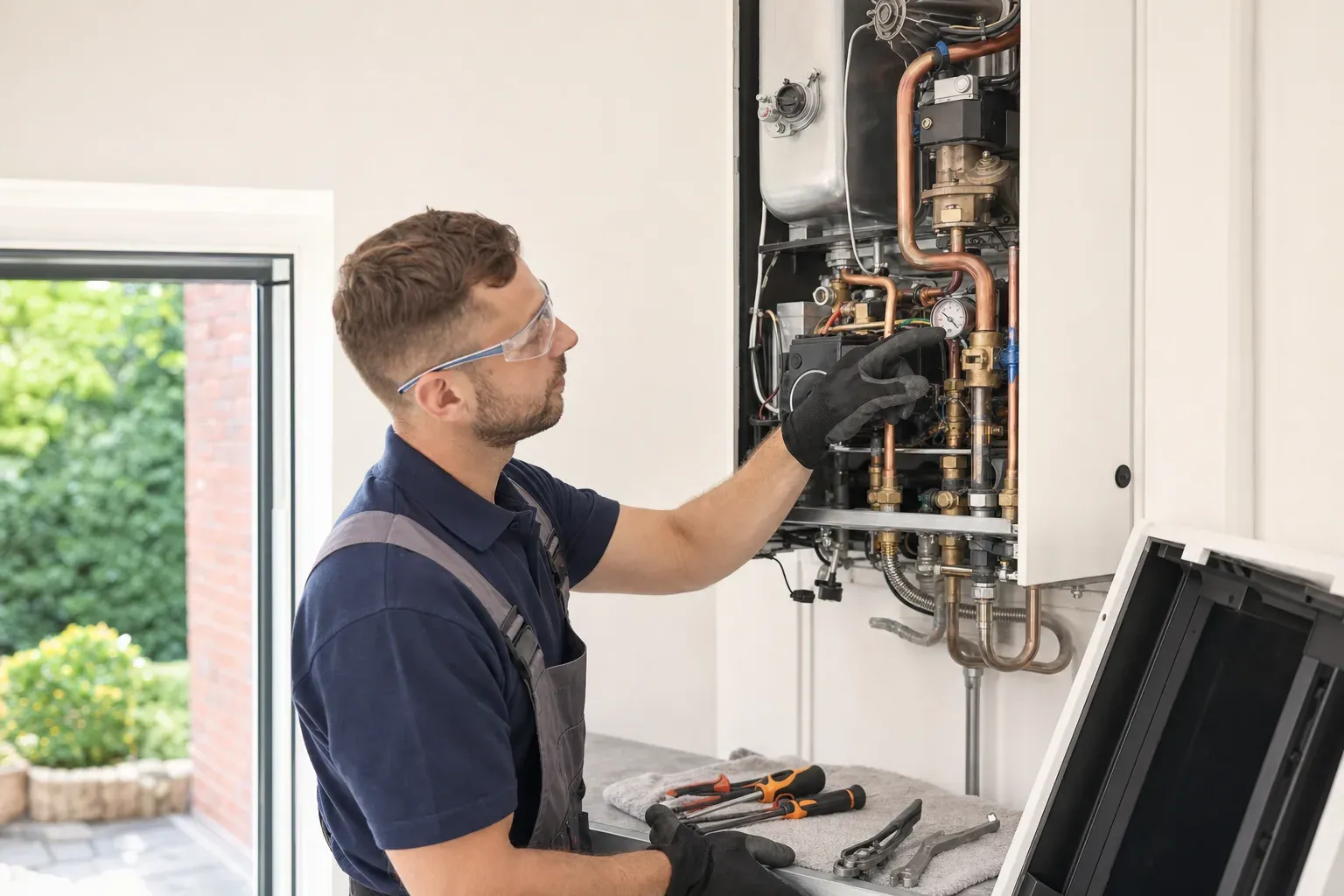
Call an engineer if the pressure keeps dropping after you’ve topped up, if you can see water coming from the boiler, or if the relief valve pipe is dripping. Anything inside the casing needs a Gas Safe registered engineer, and so does anything on the gas side. Most of these are straightforward fixes on a boiler repair visit.
If your boiler is older and this is one fault in a long line, read our guide on whether to repair or replace your boiler first. A yearly boiler service also helps, because an engineer will check the expansion vessel and relief valve as part of it.
If you smell gas at any point, don’t touch the boiler or any switches. Open the windows, turn the gas off at the meter if you can do it safely, leave the property and call the National Gas Emergency Service on 0800 111 999. The line is open all day, every day.
Frequently asked questions
What should my boiler pressure be?
On most sealed heating systems the gauge should read around 1 to 1.5 bar when the heating is off and cold. It will rise a little when the system is hot. Your boiler's manual gives the exact figure for your model, so check that first.
Is it dangerous if my boiler pressure is low?
Low pressure on its own isn't dangerous. Most boilers simply stop working and show a fault code until the pressure is back up. If you ever smell gas, that is a different matter: leave the boiler alone and call the National Gas Emergency Service on 0800 111 999.
How often is it normal to top up boiler pressure?
A sealed system shouldn't need topping up more than once or twice a year, usually after bleeding radiators. If you're repressurising every few weeks, water is getting out somewhere. Book an engineer to find the cause rather than keep topping up.
Can I fix a boiler that keeps losing pressure myself?
You can safely top up through the filling loop, bleed radiators and look for visible leaks on pipes and radiator valves. Anything inside the boiler casing, including the expansion vessel and pressure relief valve, is a job for a Gas Safe registered engineer. Never take the casing off yourself.
Why is water dripping from the pipe outside my boiler?
That pipe is usually the pressure relief valve discharge pipe. If it's dripping, the valve is letting water out, either because the pressure has been too high or because the valve itself is worn. Either way it needs an engineer to look at it.